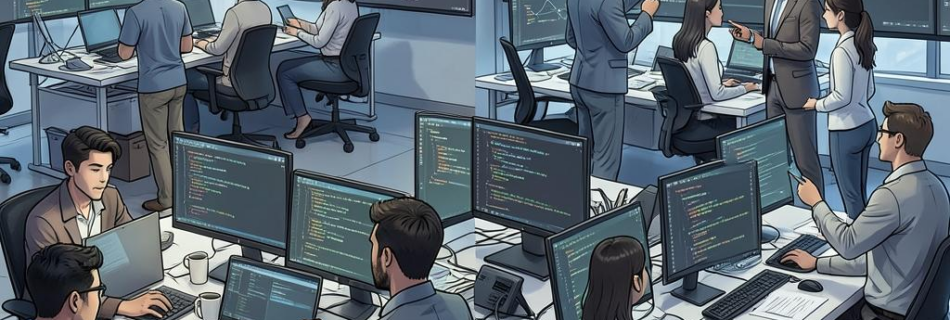
Software Engineering Without Architecture Knowledge

AI didn’t kill software engineering; it simply executed those who were never engineers to begin with, but mere syntax translators.

The rise of generative AI has made one reality brutally apparent: if your daily value relies on stitching together Stack Overflow snippets, writing routine boilerplate, or prompting an LLM to generate CRUD endpoints, your marginal economic utility is rapidly approaching zero. Generative models excel at the *accidental complexity* of software—the typing, the syntax, the common patterns. Where they hallucinate and fail catastrophically is at the boundary of *essential complexity*: systems design, resource constraints, and distributed realities.

Joel Spolsky’s **Law of Leaky Abstractions** has never been more relevant: *”All non-trivial abstractions, to some degree, are leaky.”* When AI-generated code inevitably hits production scale, who diagnoses the memory fragmentation in an unmanaged runtime? Who designs for data partition tolerances under the **CAP theorem**, handles cache invalidation stampedes, or identifies a silent thread starvation bug inside an event loop?

An AI can write a microservice in seconds, but it cannot conceptualize Conway’s Law, negotiate trade-offs between eventual consistency and latency, or design resilient failure domains across multi-region clusters. Engineers who understand memory hierarchies, kernel I/O models, and distributed consensus mechanisms thrive today because they are the only ones capable of evaluating, constraining, and debugging what the machines produce.

Fred Brooks asserted decades ago in *No Silver Bullet* that the hardest part of building software is the conceptual formulation of complex entities, not the syntactic implementation. We are moving from the era of the “Coder” to the era of the “Architect-Inspector.”

*Critique & Discussion:*
If the barrier to code generation has dropped to zero, what is your team doing to validate architectural integrity? When an AI delivers clean-looking code that subtly violates your ACID guarantees under peak concurrency, does your engineering culture possess the depth to catch it in review—or are you blindly deploying operational liabilities?

—

AI 並沒有摧毀軟體工程,它只是無情地淘汰了那些從未真正理解底層架構、僅充當「語法翻譯機」的搬運工。

生成式 AI 的普及揭示了一個殘酷的事實:如果你的核心競爭力建立在複製貼上程式碼片段、串接既成 API,或是依賴 AI 生成標準 CRUD 樣板,你的邊際經濟價值正在加速歸零。AI 擅長處理軟體工程中的「偶然複雜性」(Accidental Complexity)——語法結構、典型演算法與樣板撰寫;但當面臨「本質複雜性」(Essential Complexity)——系統拓撲、高併發調優與分散式架構權衡時,AI 往往陷入幻覺與架構失能。

軟體大師 Joel Spolsky 曾提出著名的**「抽象洩漏法則」(Law of Leaky Abstractions)**:「所有重大的抽象機制,在某種程度上都是漏洞百出的。」當 AI 產出的程式碼在高負載的生產環境中運作時,誰來排查記憶體洩漏與碎片化?誰來在 **CAP 定理**的架構限制下權衡一致性與可用性?面對連線池枯竭(Connection Pool Exhaustion)與快取雪崩,依賴提示詞的開發者只能束手無策。

正如 Fred Brooks 在《沒有銀彈》中所言,軟體建構最艱鉅的任務在於概念結構的塑模,而非敲打鍵盤的語法實現。AI 時代淘汰的是「語法打字員」,卻極大化了精通系統架構、作業系統 I/O 模型與分散式共識機制之「架構檢驗師」的價值。

*反思與探討:*
當程式碼生成的邊際成本降為零,你的團隊如何把關系統架構的穩健性?當 AI 產出看似架構整潔、卻在高併發下悄然破壞資料一致性的代碼時,你的團隊是否有足夠的底層技術底蘊在 Code Review 中將其攔截,還是正盲目地將未爆彈推向生產環境?

#SoftwareArchitecture #DistributedSystems #AIFutureOfWork #ITProTutor

The Decline of Administrative White-Collar Work

The traditional office cubicle isn’t just evolving—it’s undergoing a silent, algorithmic liquidation.

Routine administrative tasks that once formed the backbone of white-collar careers—such as complex scheduling, data entry, and basic legal contract reviews—are now being executed flawlessly by agentic AI systems and Large Language Models (LLMs) in seconds. For operational professionals, the writing is on the wall: pure task execution is no longer a viable long-term career strategy.

However, as an IT mentor, I see this shift not as an absolute endpoint, but as a critical strategic pivot. The displacement of operational execution creates an urgent, enterprise-wide demand for operational *governance*.

To stay relevant, administrative staff must transition from operational execution into **AI Workflow Auditing** and **Compliance Facilitation**. The bridge between raw AI productivity and real-world enterprise deployment requires rigorous human oversight. Key transition steps include:
1. **Mastering Human-in-the-Loop (HITL) Frameworks:** Learning to design validation checkpoints within automated business logic.
2. **AI Compliance & Data Hygiene:** Navigating regulatory mandates (e.g., the EU AI Act, GDPR) to ensure AI workflows handle data legally and ethically.
3. **Algorithmic Edge-Case Management:** Developing specialized skills to detect LLM hallucinations, logic gaps, and automated workflow drifts.

**Critical Reflection:**
This transition vividly illustrates Joseph Schumpeter’s theory of *Creative Destruction*—legacy administrative roles are dismantled to give birth to high-value oversight functions. Yet, we must confront a pressing systemic question: If AI systems are deployed precisely because they outperform human speed and analytical capacity, how do human auditors maintain the technical capability to catch deeply buried algorithmic failures? Are we truly mitigating risk, or merely deferring visible human errors into silent, systematic algorithm biases?

Where does your organization draw the boundary between fully automated efficiency and non-negotiable human accountability?

—

傳統的白領辦公桌並非只是在演進,而是正在經歷一場靜悄悄的「演算法清算」。

曾構成白領職涯基石的日常行政、複雜行程排定以及基礎合約審查,如今已被 AI 代理(AI Agents)與大型語言模型(LLM)在數秒內精確完成。對營運基層人員而言,趨勢非常明確:純粹的「任務執行」已不再具備長期的職涯價值。

然而,作為一名 IT 導師,我認為這並非終點,而是一個關鍵的策略轉折點。營運「執行」的消失,反而催生了企業對營運「治理」的急迫需求。

要維持職場競爭力,行政人員必須從「流程執行者」轉型為「**AI 流程審計者**」與「**合規管理師**」。連結 AI 高生產力與企業實際落地之間的橋樑,正是嚴謹的人類監督。轉型的核心步驟包括:
1. **掌握人機協同(HITL)框架:** 學習在自動化業務邏輯中設計關鍵的驗證檢查點。
2. **AI 合規與資料治理:** 理解法規要求(如歐盟 AI 法案、GDPR),確保 AI 流程合規且符合倫理。
3. **異常與邊界案例管理:** 培養識別 AI 幻覺、邏輯漏洞及自動化流程偏差的專業能力。

**深度思考與批判性提問:**
這種轉型完美呼應了熊彼特的「創造性破壞」(Creative Destruction)理論——舊有的行政職位被解構,進而孕育出更高價值的監督角色。然而,我們必須面對一個迫切的系統性問題:如果企業導入 AI 正是因為其速度與分析能力超越人類,我們該如何確保人類審計員仍具備足夠的能力去抓出隱蔽的演算法錯誤?我們究竟是在消除營運風險,還是在無意中將「人為疏失」轉化為更難察覺的「系統性演算法偏見」?

在自動化效率與不可妥協的人類問責制之間,貴公司又是如何劃分界線的?

#FutureOfWork #AIGovernance #CareerTransition #ITProTutor

Creative Industry Disruption

Generative AI didn’t kill creativity; it ruthlessly automated execution, turning mid-tier digital craft into an infinite, zero-marginal-cost commodity overnight.

As an IT educator and technologist watching the creative sector collide with foundational models, the paradigm shift is unmistakable. For decades, the creative industry conflated technical execution—pushing pixels in Figma, mastering pen tools, or drafting SEO-optimized copy—with genuine creative value. Diffusion models and Large Language Models have decoupled execution from imagination. When generating an 8K illustration or a 1,000-word marketing hook takes ninety seconds and a fraction of a cent in compute, technical production ceases to be a defensible competitive advantage.

This brings us face-to-face with Polanyi’s Paradox: *”We know more than we can tell.”* AI excels at statistical pattern recognition and codified logic, but it inherently lacks tacit knowledge—the visceral understanding of cultural nuances, emotional resonance, and contextual subtext. Consequently, the industry’s economic moats have migrated upward to three core pillars:

1. **Taste (Curatorial Intelligence):** In a world drowning in synthetic mediocrity, the ability to discern what is authentically compelling from what is merely plausible is scarce.
2. **Creative Direction:** The capacity to architect an overarching vision, orchestrate human-machine workflows, and maintain systemic intent.
3. **Brand Strategy:** Rooting output in business objectives, human psychology, and long-term brand equity rather than ephemeral trends.

We are witnessing the Jevons Paradox in action: lowering the cost of asset generation will exponentially increase the demand for creative output, but paradoxically lower the market value of pure executors.

This forces uncomfortable questions for industry leaders and junior practitioners alike: If technical execution is no longer a barrier to entry, how do junior creatives cultivate high-level “taste” without spending years in the execution trenches? Furthermore, if your entire creative identity rests on *how* you build an asset rather than *why* it should exist, what happens to your career when the build button becomes autonomous?

***

生成式 AI 並沒有抹殺創意,它只是無情地將「執行層面」的生產力徹底自動化,一夜之間將中階數位工藝變成了邊際成本趨近於零的大宗商品。

身為一名資訊科技專業人士與教育者,我看著創意產業與底層模型正面交鋒,技術典範轉移的軌跡清晰可見。過去數十年來,創意產業往往將「技術執行」——例如精通向量繪圖工具、修圖技巧或產出符合 SEO 規範的文案——與真正的「創意價值」混為一談。擴散模型(Diffusion Models)與大型語言模型(LLMs)的成熟,徹底切斷了執行力與想像力的綁定。當產出一張高品質插畫或一篇行銷文案只需幾秒鐘的算力成本時,「純製作能力」便不再構成任何護城河。

這正是「波蘭尼悖論」(Polanyi’s Paradox)的具體體現:「我們所知遠多於我們所能言傳。」AI 擅長處理已編碼的數據與統計規律,但它缺乏「默會知識」(Tacit Knowledge)——那種根植於文化脈絡、人類共情與情境直覺的非結構化認知。因此,創意經濟的護城河已全面轉移至三大維度:

1. **品味(策展式智慧):** 當低成本的生成內容氾濫成災,能夠精準辨識「平庸幻象」與「卓越靈魂」的篩選能力反成稀缺資產。
2. **創意導向:** 具備跨領域的架構視野,能指揮人機協同工作流,並維持整體系統意圖的連貫性。
3. **品牌策略:** 將視覺與文字錨定於商業目標、市場心理學與長期品牌資產,而非隨波逐流的演算法趨勢。

這引發了深層反思:如果工具操作不再具備進入門檻,新一代創意人才若跳過基層執行的打磨,該如何培養高階的「品味」與「判斷力」?若你的核心競爭力僅在於「如何產出」而非「為何存在」,在執行流程全面自動化的時代,你的不可替代性究竟何在?

#GenerativeAI #FutureOfWork #CreativeStrategy #ITProTutor

The Eradication of First-Tier Customer Support

The classic “Hello, have you tried turning it off and on again?” entry-level role is officially going extinct.

Across the enterprise landscape, Large Language Models (LLMs) integrated with real-time voice and multimodal capabilities are rapidly replacing traditional Tier-1 inbound voice and chat support agents. Modern AI models do not merely read from rigid decision trees; they comprehend complex context, interface directly with backend APIs, resolve routine queries, and maintain endless patience at a fraction of human operational costs. From an engineering and cost-efficiency standpoint, this digital transformation is an indisputable victory for organizations striving for 24/7 hyper-scalability.

However, as an IT professional and educator, I view this shift with deep concern for the industry’s long-term health. Tier-1 support was never just about resetting passwords or tracking packages—it served as the primary “stepping-stone” for high school leavers, non-traditional graduates, and junior tech enthusiasts. It was the functional sandbox where entry-level talent developed crucial domain knowledge, mastered troubleshooting logic, understood business processes, and learned the art of translating technical jargon for non-technical users before advancing to Tier-2 engineering or systems administration.

By completely automating the bottom rung of the operational ladder, enterprise tech is inadvertently cutting off its own talent pipeline.

This dilemma brings us face-to-face with Joseph Schumpeter’s economic theory of *Creative Destruction*, where technological innovation continuously destroys older economic structures from within to create new ones. While AI creates high-tier roles like Prompt Engineers and AI Systems Integrators, it simultaneously creates a stark “experience gap.” Junior candidates are now expected to step directly into complex Tier-2 or development roles without the prerequisite foundational exposure.

Critical questions for industry leaders, HR strategists, and educators to consider:
1. If AI eliminates the entry-level sandbox, how do we bridge the practical knowledge gap for tomorrow’s senior systems architects?
2. Are enterprise organizations prematurely trading long-term internal talent pipelines for short-term operational savings?
3. How must technical educators redefine junior curricula when traditional entry-level IT roles cease to exist?

「你好,請問有嘗試過重啟設備嗎?」這句曾經作為無數 IT 人員入行的經典開場白,正正式走向歷史。

在當前企業的數位轉型浪潮中,結合即時語音與多模態技術的大型語言模型(LLM),正迅速取代傳統的第一線(Tier-1)語音與線上客服人員。現代 AI 不再只是按部就班地讀取硬性腳本,而是能理解複雜語境、直接對接後端 API、處理日常故障排除,並以極低的營運成本提供 24/7 不間斷的高品質服務。從 IT 架構與營運成本效益的角度來看,這種轉變無疑是企業追求極致規模化與效率的重大勝利。

然而,身為 IT 專家與教育者,我對此趨勢背後隱藏的產業生態危機深感擔憂。第一線支援職位從不單純是「重設密碼」或「查詢訂單」,它更是應屆畢業生、非本科系轉職者以及初級技術人員最重要的「行業跳板」。這是一個真實的實作沙盒,讓新手在晉升至 Tier-2 工程師或系統管理員之前,累積實務領域知識、鍛鍊除錯邏輯、熟悉業務流程,並學習如何向非技術使用者解釋專業概念。

當企業完全將職涯梯級的最底層自動化時,無意間也砍斷了自身的人才培育鏈。

這現象完美體現了經濟學家熊彼特(Joseph Schumpeter)的「創造性破壞」(Creative Destruction)理論——新技術在創造新價值的同時,正劇烈破壞舊有職務結構。雖然 AI 創造了 Prompt 工程師和 AI 系統整合師等高階職位,但也造成了嚴重的「經驗斷層」。如今,初級人才被要求在缺乏底層實務經驗的情況下,直接勝任複雜的 Tier-2 或開發崗位。

值得產業領袖、HR 策略師與教育工作者深思的關鍵問題:
1. 當 AI 銷毀了基層實習沙盒,我們該如何填補培養未來高級系統架構師所需的實務知識缺口?
2. 企業是否正在為了短期的營運成本削減,而犧牲了長期的人才梯隊建設?
3. 當傳統 Entry-level 職位消失,資訊教育該如何重新定義初級人才的培訓方向?

#AIandFutureOfWork #CustomerSupport #TechCareers #ITProTutor

Logic vs. Ephemeral Syntax

AI can generate a thousand lines of Python in seconds, but it cannot decide if your system’s core logic is fundamentally flawed.

Frameworks rise and fall; syntax is ephemeral. In the era of Generative AI and automated code tools, writing syntax is no longer the primary bottleneck in software engineering. What truly endures is the invisible infrastructure of the mind: discrete logic, algorithmic thinking, recursion, and system architecture.

As an IT professional and tutor, I see a dangerous trend emerging: developers relying on AI to churn out code without understanding the underlying computational models. When an AI outputs syntactically correct yet logically defective code, only a engineer grounded in fundamental computer science principles can diagnose the architectural failure.

In his seminal essay *No Silver Bullet*, Fred Brooks distinguished between **Accidental Complexity** (syntax, language quirks, tooling) and **Essential Complexity** (the abstract logic inherent to the problem domain). AI has mastered accidental complexity—it solves syntax instantly. However, it cannot solve essential complexity for us. As Hal Abelson famously wrote in *SICP*, “Programs must be written for people to read, and only incidentally for machines to execute.”

Are we accidentally training a generation of “prompt coders” who know how to request syntax but lack the discrete logic required to verify correctness? When writing code becomes virtually free, will raw algorithmic reasoning become the ultimate competitive advantage in the future of work?

***

AI 能在數秒內生成上千行 Python 程式碼,但它永遠無法替代你對系統底層邏輯的批判性思考。

語法會過時,框架會被淘汰,唯有邏輯歷久彌新。在生成式 AI 與自動化程式碼工具普及的時代,撰寫程式語法已不再是軟體工程的主要瓶頸。真正決定工程師價值的,是那些不可見的思維架構:離散邏輯、演算法思維、遞迴推理以及系統架構設計。

作為一名 IT 專業人士與導師,我觀察到一個值得警惕的現象:許多開發者開始過度依賴 AI 產生程式碼,卻缺乏對計算模型本質的理解。當 AI 輸出「語法正確但邏輯崩潰」的系統架構時,唯有深諳電腦科學基礎原理的工程師,才能找出並修復那些致命的本質缺陷。

軟體工程大師 Fred Brooks 在其經典名篇《沒有銀彈》(*No Silver Bullet*)中,深刻地區分了**「次要複雜性」**(Accidental Complexity,如語法、工具與框架)與**「本質複雜性」**(Essential Complexity,即問題領域本身的抽象邏輯)。AI 正在全面消除次要複雜性,但它無法替我們解決本質複雜性。正如《SICP》經典著作所言:「程式碼是寫給人看的,只是順便讓機器執行而已。」

我們是否正在無意間培養一群只會輸入 Prompt、卻失去離散邏輯推演能力的新一代「提示工程師」?當「寫語法」的成本降為零,「演算法邏輯」是否會成為未來職場中唯一真正無法被取代的護城河?

#SoftwareEngineering #FutureOfWork #ArtificialIntelligence #ComputerScience #ITProTutor

Prompt Engineering: Fleeting Trend or Core Literacy?

Is prompt engineering the modern equivalent of knowing how to search on Google, or a temporary bridge to fully autonomous AI systems?

As an IT professional and educator, I am frequently asked whether “Prompt Engineer” is a viable long-term career. The trajectory is becoming remarkably clear: as Large Language Models (LLMs) mature, natural language prompting is rapidly standardizing. With the rise of autonomous agents, reasoning models, and built-in prompt auto-optimization, the need for complex, artisanal “prompt hacks” is diminishing. Prompting is transitioning into a standard user interaction skill—much like typing or querying a search engine—rather than a standalone engineering discipline.

Conversely, what remains deeply resilient is foundational Computer Science: Data Structures, Algorithms, and System Architecture.

This dynamic is perfectly illustrated by *Spolsky’s Law of Leaky Abstractions*, which states that “all non-trivial abstractions, to some degree, are leaky.” AI model output is the ultimate abstraction over code. However, when AI-generated code suffers from race conditions, memory leaks, or inefficient algorithmic complexity ($O(n^2)$ instead of $O(n \log n)$), natural language cannot fix the underlying implementation. Without a firm grasp of state management, deterministic logic, and computational limits, one cannot audit, secure, or scale AI-generated systems.

This raises a critical question for the future tech workforce: Are we over-indexing on fluid, surface-level interactions while neglecting the core architectural rigor that prevents catastrophic technical debt?

When AI reduces the marginal cost of syntax to zero, the value of structural logic and algorithmic thinking skyrockets. Are you building your career on perishable prompt recipes, or are you investing in the immutable principles of computer science?

***

「提示工程」(Prompt Engineering)究竟是軟體工程的終極演化,還是 AI 發展史上一道短暫的過渡橋樑?

作為一名 IT 專業人士與導師,我經常被問到:「提示工程師」是否值得作為長期職涯目標?答案正在迅速明朗:隨著大語言模型(LLM)的自主推理能力與自動優化技術暴增,複雜的自然語言提示技巧正在高度標準化與商品化。就像當年學習搜尋引擎的「高級搜尋語法」一樣,提示詞最終只會變成每個人必備的基礎 UI 互動能力,而非一門獨立的工程學科。

相對地,真正禁得起時間考驗的,依然是資料結構(Data Structures)、演算法(Algorithms)與系統架構等計算機科學底層基本功。

這完美印證了著名軟體法則——*史波斯基漏水抽象法則(Spolsky’s Law of Leaky Abstractions)*:「所有非特異的抽象化機制,在某種程度上都是會漏水的。」AI 產出的程式碼是軟體開發史上最高階的抽象化,但當 AI 生成的系統出現非同步鎖死、記憶體洩漏或演算法複雜度爆表時,自然語言無法替你偵錯。唯有理解時間與空間複雜度、確定性邏輯與系統狀態,才能在抽象層破裂時化險為夷。

這引發了一個值得深思的問題:我們是否正在過度追逐表面工具的轉瞬即逝,卻忽略了防止技術債(Technical Debt)累積的架構嚴謹性?

當 AI 將「寫語法」的成本降至趨近於零時,「系統性思考」與「演算法邏輯」的價值反而呈指數級上升。你的職涯護城河,是建構在易失的 Prompt 技巧上,還是紮根於永恆的計算思維中?

#PromptEngineering #FutureOfWork #ComputerScience #ITProTutor

AI Co-Pilots vs. Autonomous Agent Workforces

Are you ready to manage an enterprise workforce that doesn’t sleep, ask for raises, or wait for your next manual prompt?

The enterprise technology landscape is undergoing a seismic shift. We are rapidly transitioning from the era of **AI Co-Pilots**—interactive tools like Microsoft Copilot that augment human productivity under a strict “Human-in-the-Loop” (HITL) model—to **Autonomous Agent Workforces**. Powered by multi-agent orchestration frameworks (such as AutoGen or CrewAI), these systems adopt a “Human-on-the-Loop” or fully autonomous posture. They can decompose high-level business directives, assign sub-tasks to specialized AI agents, trigger internal APIs, and execute complex, end-to-end operational workflows without a single human checkpoint.

For IT leaders and software architects, this evolution fundamentally redefines system design, application integration, and enterprise governance. However, replacing human orchestration with self-directing algorithmic swarms introduces profound technical and systemic vulnerabilities.

**Critical Analysis & Strategic Reflection:**

Applying economic **Principal-Agent Theory** to AI architecture reveals a dangerous friction point: as autonomous agents gain agency to execute decisions, aligning their operational pathways with enterprise intent becomes increasingly volatile. When multi-agent systems interact dynamically at compute speed, error propagation occurs exponentially before traditional logging systems even register anomalous behavior. Furthermore, under modern **Zero Trust Architecture**, how do we establish dynamic identity, least-privilege access, and cryptographic accountability for ephemeral agents capable of executing privileged code?

We must critically evaluate: Are we engineering sustainable operational velocity, or are we recklessly delegating architectural accountability to stochastic black boxes? When a fully autonomous multi-agent pipeline causes catastrophic business disruption, where does the ultimate liability rest—with the prompt engineer, the software architect, or the executive board that authorized removing the human safety net?

—

你準備好管理一個不需要睡眠、不要求提薪,甚至不再等待你下達指令的企業級 AI 數位團隊了嗎?

企業級資訊科技正在迎來一場根本性的典範轉移。我們正加速從 **AI 協同導航(Co-Pilots)** 時代—即透過微軟 Copilot 等工具在「人機協同(Human-in-the-Loop)」模式下輔助人類生產力,邁向 **自主 Agent 數位團隊(Autonomous Agent Workforces)** 的新紀元。基於多 Agent 架構(如 AutoGen、CrewAI)的系統轉向「人類在旁監督(Human-on-the-Loop)」甚至完全自主營運;它們能自主拆解複雜的企業戰略目標、分派子任務給專屬 Agent、呼叫 API,並在無需任何人類查核點的情況下,執行端到端的高階業務流程。

對 IT 架構師與技術主管而言,這重塑了軟體架構、系統整合與企業治理的方向。然而,將決策與執行權完全交由自主演算法群組,亦帶來了前所未有的結構性風險。

**關鍵評論與架構反思:**

若將經濟學中的**「委託-代理人理論(Principal-Agent Theory)」**套用於 AI 架構,便會揭示出嚴重的信任對立:當自主 Agent 擁有獨立決策權時,我們如何確保其執行路徑完全契合企業的核心意圖?當多個 Agent 在雲端以機器速度互動,任何邏輯偏差都可能引發連鎖效應,在傳統日誌(Logs)尚未察覺前便造成損害。此外,在**零信任(Zero Trust)**資安架構下,我們該如何為這些能執行特權程式碼的動態 Agent,建立實時的身份識別與最小權限控管?

我們必須深思:我們是在打造極致的營運效率,還是在將系統架構的責任盲目委託給不可控的黑盒子?當一個完全自主的 AI 流程造成數百萬美元的營運災難時,最終的責任歸屬究竟是 Prompt 工程師、系統架構師,還是決定撤除人類監督關卡的企業高層?

#AIAgents #FutureOfWork #EnterpriseIT #ITProTutor

The Death of the Junior Financial Analyst

The humble Excel spreadsheet is no longer the ultimate weapon of entry-level finance—it has been reduced to an automated background process within an algorithmic pipeline.

As an IT professional and educator who bridges software architecture with corporate operations, I am witnessing a monumental shift in corporate finance: the total automation of the junior financial analyst’s traditional toolkit. Modern enterprise architectures now integrate advanced LLMs, automated ETL workflows, and Python-driven data pipelines directly into ERP systems. Financial modeling, dynamic DCF valuations, dynamic audit sampling, and variance reporting—tasks that once demanded 80-hour workweeks of manual data manipulation—are now executed via API calls in milliseconds with higher precision and zero human fatigue.

This technical evolution creates a structural paradox. The entry-level role was historically an apprenticeship where young professionals developed financial intuition through the sheer repetition of low-level data crunching. With AI consuming this foundational layer, the “data worker” path is officially dead. Junior analysts are now forced to immediately step into high-level strategic advisory roles, shifting their focus from *data processing* to *data translation, risk interpretation, and cross-functional influence*.

**Critical Reflection & Discussion:**

According to **Polanyi’s Paradox** (“we know more than we can tell”), AI excels at executing explicit rules and explicit knowledge, but struggles with the tacit knowledge, ethical nuances, and political realities of boardroom decision-making. Strategic advisory requires this exact tacit understanding.

However, this raises a fundamental industry question: *If AI completely eliminates the “grunt work” that built foundational domain knowledge, how will the tech-driven corporate landscape train the next generation of senior leaders? Are we building a future of hyper-efficient automated systems overseen by a talent pool lacking deep, intuitive experience?*

What are your thoughts? Is your organization upskilling entry-level talent to handle strategic advisory, or simply reducing headcount? Leave your comments below.

***

傳統 Excel 試算表不再是初級金融分析師的終極武器——如今,它不過是一段在後台自動執行的流水線腳本。

作為一名跨越軟體架構與企業營運的 IT 專業人士與教育者,我正在見證企業金融領域的巨變:初級分析師的傳統工具箱已全面走向自動化。現代企業架構將大型語言模型(LLM)、自動化 ETL 工作流與 Python 數據管道直接整合至 ERP 系統中。財務建模、動態 DCF 估值、審計抽樣與差異分析——這些過去需要初級分析師每週加班 80 小時進行的手動數據搬運工作,現在透過 API 呼叫即可在毫秒內完成,且精準度更高、完全不會疲勞。

這種技術演進引發了結構性的悖論。傳統的初級職位本質上是一種「學徒制」,年輕人才透過大量重複的基層數據處理來培養商業直覺。隨著 AI 吞噬了這個基礎層級,「數據搬運工」的職涯路徑已正式告終。初級分析師如今被逼迫必須直接跳級為「戰略顧問」,將焦點從「數據處理」轉移至「數據翻譯、風險解讀與跨部門決策影響」。

**深度探討與批判性反思:**

根據**波蘭尼悖論(Polanyi’s Paradox)**——「我們所知的多於我們能言說的」,AI 極度擅長執行明確的規則與顯性知識,卻難以掌握董事會決策所需的隱性知識(Tacit Knowledge)、道德微妙性與商業政治現實。而戰略顧問正是極度依賴這種隱性知識的領域。

這引發了一個關鍵的產業思考:*當 AI 完全消滅了建立領域知識基礎的「基層苦力工作」時,由技術驅動的企業未來該如何培養下一代的高階領導者?我們是否正在建立一個由「缺乏直覺經驗的人才」所監控的「超高效自動化系統」?*

您怎麼看?貴公司是在提升初級人才的戰略諮詢能力,還是僅僅在縮減人力?歡迎在下方留言討論。

#AIFutureOfWork #FinTech #BusinessIntelligence #ITProTutor

Mid-Career Redundancy in IT Management

Is your sprint velocity high enough to outrun AI-driven corporate downsizing?

Across the global tech ecosystem, middle-aged Project Managers and Scrum Masters are standing in the crosshairs of sudden corporate restructuring. As Generative AI and intelligent workflow automation absorb routine orchestration—such as tracking tickets, compiling status reports, and enforcing process compliance—enterprise leadership is aggressively flattening organizational hierarchies. The uncomfortable truth is clear: the era of the purely operational “process facilitator” is closing. To remain indispensable, mid-career IT leaders must pivot toward Systems Architecture.

Systems Architecture bridges the gap between high-level business strategy and resilient technical execution. Unlike process management, which AI easily commoditizes, architecture requires deep structural design thinking, non-functional requirements trade-off analysis, and system decomposition—areas where AI serves as an amplifier rather than a replacement.

Consider **Conway’s Law**: *”Organizations design systems that mirror their communication structures.”* As AI disintermediates corporate communication directly between executive intent and engineering output, the middle-tier human relay becomes structural bloat. Furthermore, many Agile implementations have fallen victim to **Goodhart’s Law**—when velocity metrics and process adherence became the target instead of software craftsmanship, middle managers unwittingly rendered their own roles automatable.

This shift raises critical questions for every IT professional:
* Can a process-oriented manager successfully transition into a Systems Architect without returning to hands-on software development?
* As AI flattens middle management, are enterprises sacrificing long-term domain knowledge and mentorship for short-term operational efficiency?
* How are you actively rebuilding your technical moat to avoid becoming process redundancy?

***

你的敏捷衝刺速度(Sprint Velocity),跑得贏 AI 主導的企業裁員潮嗎?

在當前的科技生態系中,許多步入中年的 IT 專案經理(PM)與 Scrum Master 正首當其衝地面臨企業結構調整的危機。隨著生成式 AI 與自動化工作流迅速普及,過往由中階主管負責的進度追蹤、報告彙整與流程監督,正被系統極速取代,導致企業高層大幅推動組織扁平化。一個殘酷的現實已經擺在眼前:純粹依賴「流程協調」而缺乏硬技術背書的時代已經宣告結束。中階 IT 人才若要重塑不可替代性,關鍵轉型方向在於「系統架構(Systems Architecture)」。

系統架構連結了高階商業戰略與底層技術實踐。不同於容易被 AI 標準化的流程管理,系統架構需要複雜的設計思維、非功能性需求的權衡分析(Trade-off Analysis)以及系統解耦能力——這些正是 AI 無法取代、反而能成為架構師助力的高階領域。

從**康威定律(Conway’s Law)**的角度來看:「設計系統的組織,其產出的系統結構會重現組織的溝通結構。」當 AI 直接打破高層戰略與工程執行之間的溝通壁壘,傳統中階的「資訊轉發層」便成了組織結構上的冗餘。同時,許多敏捷流程也落入了**古德哈特定律(Goodhart’s Law)**的陷阱——當「燃盡圖」與「會議合規」被當成考核目標而非軟體工藝本身時,管理者便無意間將自己的工作變成了一套容易被 AI 自動化的腳本。

這引發了幾項值得深思的核心問題:
* 缺乏一手寫碼經驗的流程管理者,真能成功轉型為硬核的系統架構師嗎?
* 當企業為了短期效率而砍掉中階管理層,是否正在無意間犧牲長期領域知識(Domain Knowledge)的傳承與人才梯隊的培養?
* 在自動化協調的浪潮下,你打算如何重新構建自己的技術護城河?

#FutureOfWork #ITManagement #SystemsArchitecture #CareerTransition #ITProTutor

The Vanishing Entry-Level Tech Role

Is the traditional “junior software developer” officially an endangered species?

As an IT educator, I am observing a seismic shift in our industry: LLM code assistants are effortlessly generating the exact boilerplate code and routine syntax that used to be the bread and butter of entry-level engineers. If your core value relies solely on memorizing syntax or translating simple requirements into functional code, AI has already outpaced you.

However, this is not the end of junior developers—it is an evolutionary leap. To prove value today, fresh graduates must bypass being mere “syntax writers” and become “system orchestrators.” You must master what AI struggles with: deep business logic, system architecture, edge-case vulnerability testing, and critical code auditing.

Consider **Bloom’s Taxonomy of Educational Objectives**. Traditionally, entry-level devs spent years at the lower cognitive levels—*remembering* syntax and *applying* basic logic. Today, LLMs fulfill those foundational layers instantly. Fresh graduates must now immediately operate at higher cognitive levels: *analyzing* complex engineering trade-offs, *evaluating* AI-generated code for security and performance risks, and *creating* resilient systems.

This rapid transition raises critical questions for the future of tech:
* If AI eliminates the “apprentice stage” where developers historically learned by making foundational mistakes, how will the next generation develop deep, intuitive expertise?
* Are organizations sacrificing long-term senior talent pipelines for short-term productivity gains?

Your entry ticket into tech is no longer “I can write code.” It is “I can evaluate, secure, and architect solutions that AI can only assist with.” What steps are you taking to shift your mindset today?

—

傳統的「初級軟體工程師」是否正式走向滅絕?

作為一名 IT 導師,我正在見證產業的劇烈轉型:大型語言模型(LLM)編程助手能在一秒內生成過去需要初級工程師花費數小時編寫的基礎代碼與標準語法。如果你的核心競爭力僅停留在記憶語法或將簡單需求轉化為基本程式碼,那麼 AI 已經超越了你。

然而,這並非初級工程師的終點,而是一次必然的演進。新鮮人若想脫穎而出,必須迅速從「語法打字員」轉型為「系統協調者」。你必須掌握 AI 最匱乏的能力:深刻的業務邏輯理解、系統架構思維、邊緣情況(Edge Cases)分析,以及嚴謹的代碼安全審查。

借用教育學中的**布魯姆分類學(Bloom’s Taxonomy)**來看:過去,初級工程師需要在基層耗費數年進行「記憶」語法與「應用」邏輯;如今,LLM 瞬間涵蓋了這些低階認知任務。現在的新鮮人必須直接跨越至高階認知——「分析」複雜的系統取捨、「評估」AI 生成代碼的安全與性能風險,並「創造」可擴展的整體架構。

這為整個科技產業留下了值得深思的反思:
* 當 AI 抹去了供工程師犯錯與積累經驗的「學徒階段」,我們未來該如何培養出真正具備直覺與深度的高階架構師?
* 企業在享受 AI 帶來的短期高產出時,是否正在默許未來出現嚴重的人才斷層?

進入科技業的通行證不再是「我會寫代碼」,而是「我能評估、捍衛並架構出 AI 僅能輔助的完整解決方案」。你準備好調整你的學習策略了嗎?

#FutureOfWork #AIEngineering #SoftwareDevelopment #TechCareers #ITProTutor